


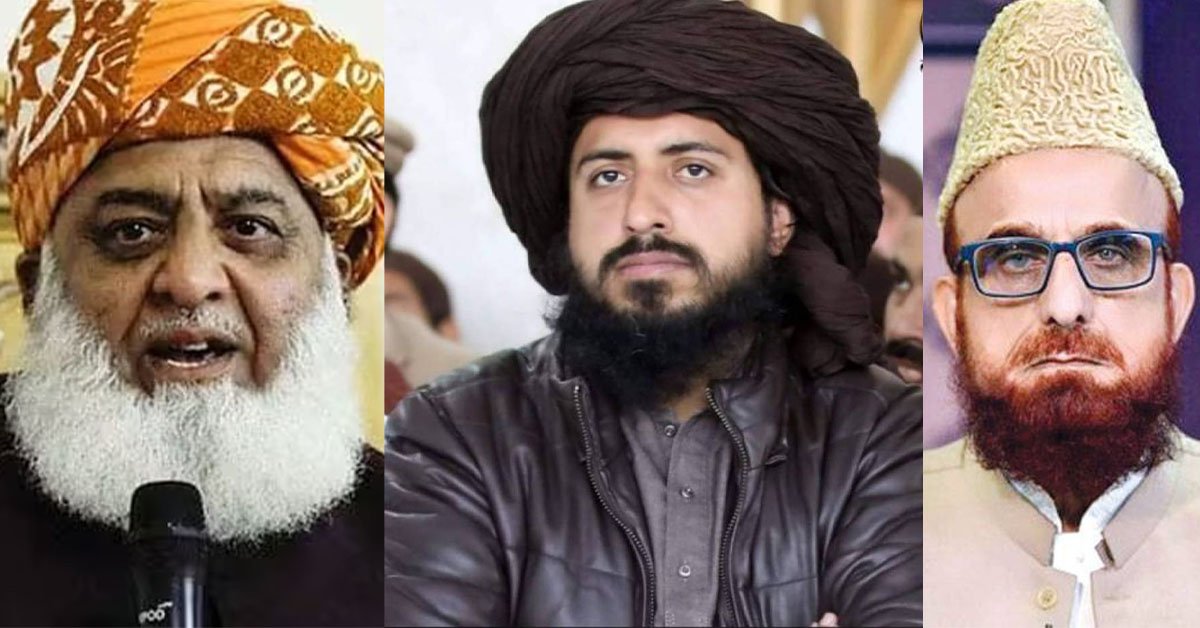
Pakistan’s carrot-and-stick policy toward Islamists has sparked unrest among their leadership. At the forefront is Jamiat Ulema-e-Islam (JUI-F) chief Maulana Fazlur Rehman.
The country’s powerful military establishment appears fully determined to crush the Tehreek-e-Taliban Pakistan (TTP) factor in the west and north-west of Pakistan. The Punjab government is leading the campaign inside Pakistan’s largest province.
Moves:
TTP has long been a headache for Pakistan. Islamabad claims that the TTP operates from Afghanistan, prompting the military establishment—the country’s key decision-maker—to launch strikes inside the neighboring country. It made “targets key TTP hideouts.” This led to clashes between the armed forces of Pakistan and Afghanistan. World called for calm. Turkey and Qatar mediated talks between the two. Frequent rounds of dialogue eventually resulted in a ceasefire, with both sides agreeing on a mechanism to curb terrorism.
Meanwhile, the Punjab government led by PML-N, regarded as an ally of the establishment, took steps to control Tehreek-e-Labbaik Pakistan (TLP), a Barelvi (Ahle Sunnat) religio-political party that is now banned. Founded in 2015, TLP has a history of violent clashes with various governments. The latest incident occurred in Muridke, resulting in deaths on both sides (police and TLP). It followed by a province-wide crackdown against TLP, culminating in the group’s official ban.
Since TLP had emerged as the only powerful religious party in Punjab, Chief Minister Maryam Nawaz, made strategic political moves to contain the damage. She engaged leading Barelvi clerics, including Mufti Muneeb-ur-Rehman, Pakistan’s grand mufti of the Barelvi/Ahle Sunnat (Hanafi) School, handing him control dozens of religious seminaries and mosques previously associated with TLP.
Under the state pressure, the party’s South Punjab chapter quickly dissociated itself from TLP and its leader, Saad Rizvi. Saad’s whereabouts remain unknown following the Muridke incident.
Maryam government, separately, announced a monthly stipend of Rs25,000 for 65,000 imams (prayer leaders) across the province.
Punjab Government to Disburse Over Rs20 Billion Annually Among Imams:
Given that Punjab has a significantly higher number of mosques, the government is expected to set eligibility criteria for receiving the stipend. The government plans to disburse around Rs19.5 billion annually to prayer leaders. It is likely to conduct tests, require degrees in religious studies, and ask applicants to submit some form of affidavit to qualify for the stipend.
However, the announcement of stipends for imams has sparked unrest among leaders of religious parties, madrasa owners, and others who leverage religious institutions for political influence. Leading these voices is Maulana Fazlur Rehman, head of the Pakistan’s most strong religio-political party representing Deoband/Ahle Sunnat school.
Deoband, Barelvi, Ahle Hadith and Shia:
Religious parties, madaris (seminaries) and mosques in Pakistan primarily represent four schools: Barelvi, Deobandi, Ahle Hadith/Ahle Hadees and Shia. Jamaat-e-Islami is unique in being pan-Islamist, not tied to any specific school.
Barelvi, Deobandi, and Ahle Hadith are collectively known as Ahle Sunnat. Both Barelvi and Deoband follow the Hanafi (Imam Abu Hanifa) school of Islamic jurisprudence (Fiqh). (Fiqh Hanafi is one of the four schools of jurisprudence being followed by Ahle Sunnat in Muslim world). But, Ahle Hadith, also associated with a rigorous Salafi interpretation, do not follow any specific Fiqh. They say they follow the Quran and Sunnah directly. Shias have their own jurisprudence and interpretations of Islamic history.
Historically, the Barelvi and Deoband movements trace back to colonial India. Though they both follow same fiqh Hanafi and call themselves Ahle Sunnah, they, however, have different interpretations of aqaid (creed) and Kalam (speculative theology). Deoband theology is closer to Ahle Hadith in creed and kalam but aligns with Barelvi in jurisprudence.
Pakistan and Religion:
Pakistan is home to roughly 80 to 90 percent Sunnis/Ahle Sunnah (Barelvi, Deoband and a tiny portion of Ahle Hadith), with the rest being Shias (around six to seven percent). Non-Muslim constitutes about 2–3% of the population.
Among Sunnis (Ahle Sunnah), over 60–70% in Punjab and Sindh follow Barelvi school. Over 80% in Khyber Pakhtunkhwa (KP) and the Pashtun belt of Balochistan are Deoband.
Given that Punjab and Sindh make up roughly 75% of Pakistan’s population, Barelvis arguably form the dominant majority, though no formal survey exists.
While Barelvis are the numerical majority, Deoband is considered the most organized and politically powerful. They are represented chiefly by Jamiat Ulema-e-Islam (JUI-F).
Fazlur Rehman draws his political strength mainly from KP and Balochistan. However, he also enjoys influence in parts of Sindh, including Karachi, and southern Punjab, where thousands of mosques and madaris are affiliated with Deoband schools.
Maryam Nawaz and Maulana Fazlur Rehman:
Maulana Fazlur Rehman was already displeased with the military establishment’s actions in the west and northwest. Now, Punjab Chief Minister Maryam Nawaz has created another problem for him. Fazl senses a conspiracy behind the Punjab government’s recent moves. He believes that such measures will eventually enable the state to take control of madaris and masajid (mosques), posing a serious challenge to religion-based power politics in Pakistan.
Currently on a visit to Punjab, Fazl addressed the 44th Annual Khatm-e-Nubuwwat Conference in Chenab Nagar, Chiniot, where he announced that imams would never accept the government stipend. He described the move as part of a larger conspiracy and positioned himself as a representative of all schools. Aalmi Majlis-e-Tahaffuz-e-Khatm-e-Nubuwwat organised the conference in Pakistan’s center of Ahmadi/Qadiani population.
Fazl then moved to Multan, where he will stay for three days at Jamia Khairul Madaris, a leading Deoband seminary. He is expected to consult clerics from different schools to coordinate a united response against the state’s “plans.”
Interestingly, Pakistanis rarely vote for religious parties. Vast majority does not seek religious parties’ role in politics. Yet historically, religious groups have played a significant role in shaping politics and what describe as the “direction” of Pakistan from the passage of the Objective Resolution to enactment of Blasphemy laws.
Many believe religious parties/Islamists operate under the umbrella of military establishment. Left wing in Pakistan has coined the term Mullah-Military Alliance to describe this relationship.
(Iftikhar Alam has written this piece)


