


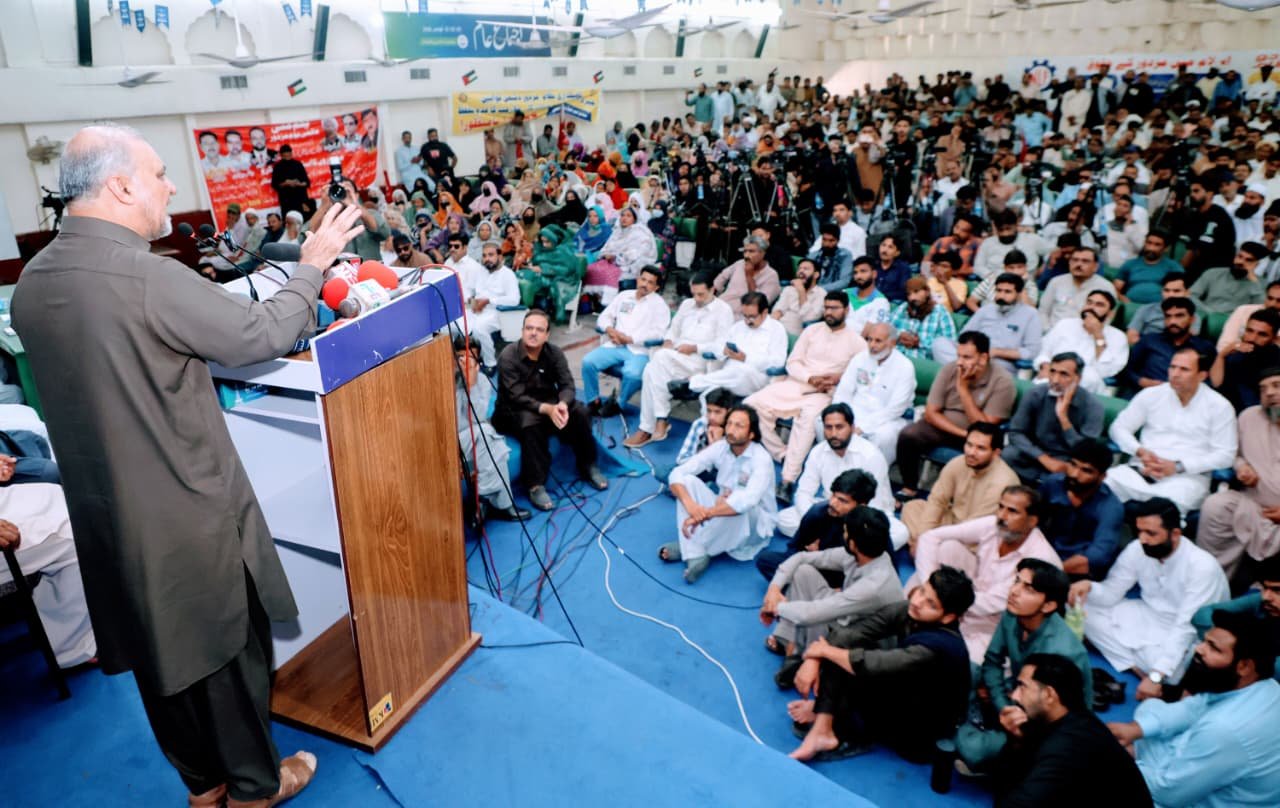
May Day rallies held in different cities of Pakistan under the aigies of various trade and labor unions. Thousands of workers participated in rallies and marches in Lahore, Islamabad, Rawalpindi, Karachi, Peshawar and other cities.
Jamaat-e-Islami Pakistan Emir Hafiz Naeem ur Rehman addressed a workers’ gathering at Mansoorah. The National Labour Federation organised the event.
Rehman said that workers deserve their due rights rather than charity, warning that an exploitative system based on inequality cannot sustain itself any longer. The JI Emir said that a privileged elite, comprising feudal lords, industrialists, and bureaucrats, has controlled national resources for decades, draining the lifeblood of the poor. He called for dismantling a deeply entrenched exploitative system.
He criticized the Benazir Income Support Programme, social security institutions and such other institutions. Rehman said these had become centres of corruption. He said millions of workers, daily wage earners, and small farmers are unable to afford education for their children. Rehman added that around 10 million children in Punjab alone are out of school.
Taxes and Common Man in Pakistan:
He further criticized the taxation structure, stating that ordinary citizens bear the brunt of heavy indirect taxes, including petroleum levies. “A common man pays around Rs120 per litre in taxes on petrol, while motorcycle owners alone contribute approximately Rs500 billion annually,” he said. The JI chief contrasted it with minimal tax contributions by large landowners.
Rehman also highlighted the lack of formal registration in the labour sector. He said that out of an estimated 80 million workers, nearly 60 million remain unregistered. And, he added, these unregistered workers often paid under informal or contract systems without legal protections. He added that workers continue to face limited access to healthcare, education, and justice.
The JI Emir condemned recent increases in petroleum prices. He warned the government to abolish petroleum levies or face intensified protests. Rehman also expressed skepticism about the government’s ability to utilize economic opportunities arising from the regional situation. He asserted that even substantial financial inflows would not benefit the public under the current system.
Rehman maintained that the JI is committed to a democratic struggle for public rights and invited workers and farmers to join Jamaat-e-Islami in efforts to bring systemic change.


