


Effective policy decisions and interventions for maternal, neonatal and child health (MNCH) depend on robust data and intersectoral collaboration despite challenges of high maternal and neonatal mortality rates, delayed care-seeking, weak referral systems, a limited skilled workforce and socio-cultural barriers that hinder access to quality healthcare.
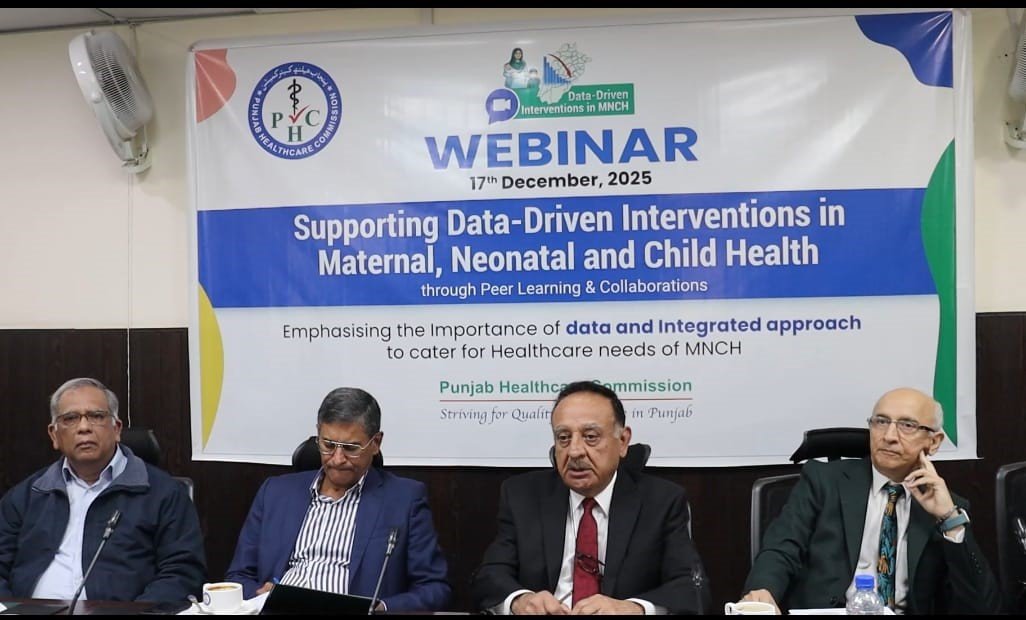
Speakers observed this during a webinar on supporting data-driven interventions in MNCH through peer learning and collaboration. The Punjab Healthcare Commission (PHC) hosted the event.
Expert-led sessions covered a wide range of MNCH themes, including maternal healthcare utilisation, community-level determinants of maternal and neonatal mortality, integrated approaches to maternal mortality reduction, the role of family physicians, neonatal survival strategies, and emerging challenges such as antimicrobial resistance affecting child survival.
They proposed a range of solutions, including strengthening emergency obstetric and newborn care, expanding skilled birth attendance, implementing maternal death surveillance and response mechanisms, empowering family physicians and adopting integrated, evidence-based strategies to address these issues.
Antimicrobial Resistance on Child Survival:
Emerging concerns, such as the impact of antimicrobial resistance on child survival and the need for robust data systems and sustained investment in maternal and child health services, were also addressed.
Commissioner PHC Prof Dr Mahmood Shoukat chaired the session, while Additional Director Monitoring, Evaluation and Quality Assurance PHC Dr Huma Rasheed moderated the programme. Representatives from the UNICEF, the Director General of Health Services, Punjab and the Institute of Public Health also attended the moot.
In his opening remarks, Chief Executive Officer PHC Dr Muhammad Saqib Aziz emphasised the importance of leveraging reliable data and intersectoral collaboration to guide effective MNCH interventions and policy decisions. High mortality rates, he stressed, point to gaps in service delivery, access, and the quality of care, which can only be addressed through evidence-based planning and targeted investments.
Vice-Chancellor Nishtar Medical University Prof Dr Mehnaz Khakwani highlighted the need for data-driven maternal health interventions to reduce maternal mortality in South Punjab. She emphasised strengthening emergency obstetric care, improving antenatal coverage, expanding skilled birth attendance and implementing maternal death surveillance and response (MPDSR).
Prof Dr Muhammad Tayyab highlighted the pivotal role of family physicians in reducing maternal mortality through early identification, continuity of care and timely referrals. He emphasised structured antenatal assessment, identification of high-risk pregnancies, adherence to clinical guidelines, and alignment with the PHC standards.
Maternal Mortality:
Prof Dr Robina Sohail talked about maternal mortality reduction initiatives in Pakistan. She emphasised expanding skilled birth attendance, strengthening emergency obstetric and newborn care (EmONC) services, implementing MPDSR and adopting integrated, data-driven strategies to save maternal lives.
Prof Dr Khawaja Ahmad Irfan Waheed, while speaking on the state of newborn health in Pakistan, highlighted the country’s persistently high neonatal mortality rate of 38 deaths per 1,000 live births, with newborn deaths accounting for 65% of under-five mortality. He stressed that achieving the SDG neonatal targets requires accelerated progress, robust data systems and sustained investment in maternal-newborn health services.
Prof Mahmood Shoukat concluded the session, underlining the need to move away from reinventing the wheel and to think bigger, especially amid the explosive population growth. He reiterated the Commission’s commitment to fostering knowledge exchange and promoting data-driven healthcare governance.

