


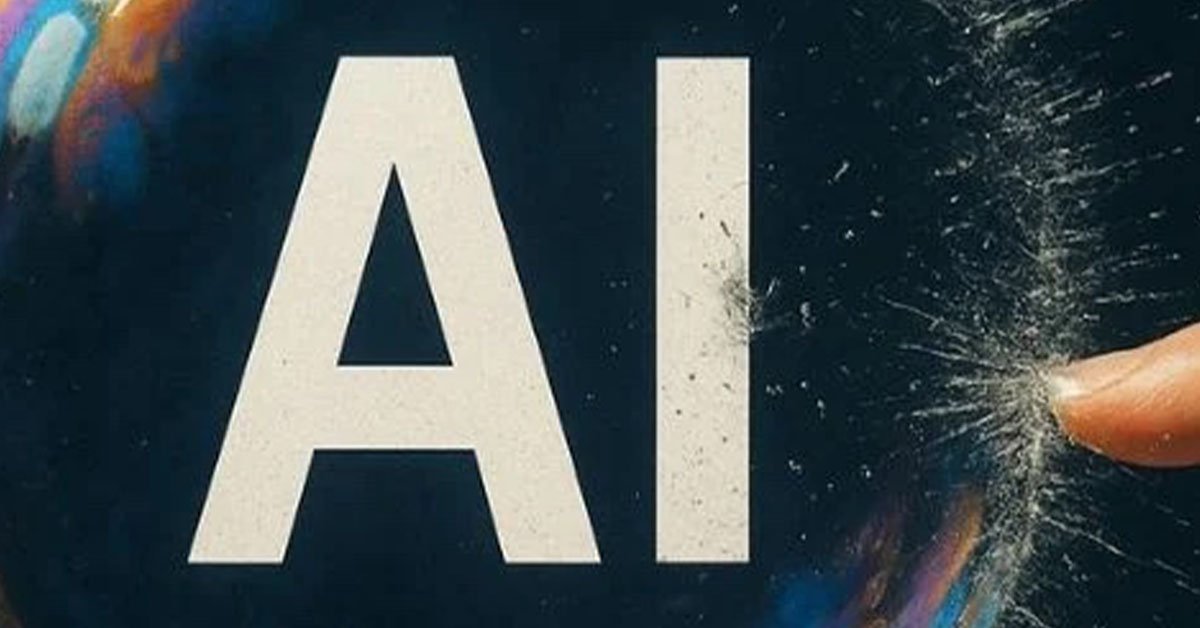
Alphabet CEO Sundar Pichai has warned that if the “AI bubble” bursts, it could impact every tech company including Google itself.
However, he remains confident that Google is better positioned than most to withstand such a disruption.
“Google’s full-stack approach,” he said, maintaining the company owning everything from AI chips to YouTube data.
“It core models and frontier science puts us in a stronger place to ride out any turbulence in the AI market,” he claimed.
Sundar Pichai’s remarks are expected to further intensify debate over the investment boom and long-term durability of the artificial intelligence.
Analysts term the AI advancement one of the most transformative technological leaps in human history. However, at the same time people are raising concern whether the rapid expansion will sustain as billions of dollars pouring into AI research, infrastructure, and startups.
AI Investment:
Interestingly, Alphabet Inc. itself is investing heavily, including a pledged £5 billion investment in the United Kingdom to strengthen AI development in next two years.
UK ministers claim the country is on track to become the world’s third major AI power after the US and China. India is also emerging as a major AI investment hub.
Sundar Pichai also acknowledged growing worries about the massive financial bets being placed on AI companies. He, however, called this “an extraordinary moment.” At the same time, he cautioned what he termed “some irrationality” in the current investment climate.
Broader concerns already surround AI’s environmental impact, energy consumption, job displacement, and reliability of generated data.
OpenAI CEO Sam Altman is thinking and believing differently. He believes the AI market is showing signs of a bubble driven by investor overexcitement.
“Are investors overexcited about AI? My opinion is yes,” Altman said in August. “Is AI the most important thing to happen in a very long time? My opinion is also yes.”
Many analysts argue that unlike the early 2000s dot-com bubble, the AI revolution is backed by real-world demand, large-scale infrastructure, and long-term commercial applications. They believe it will not collapse.

