


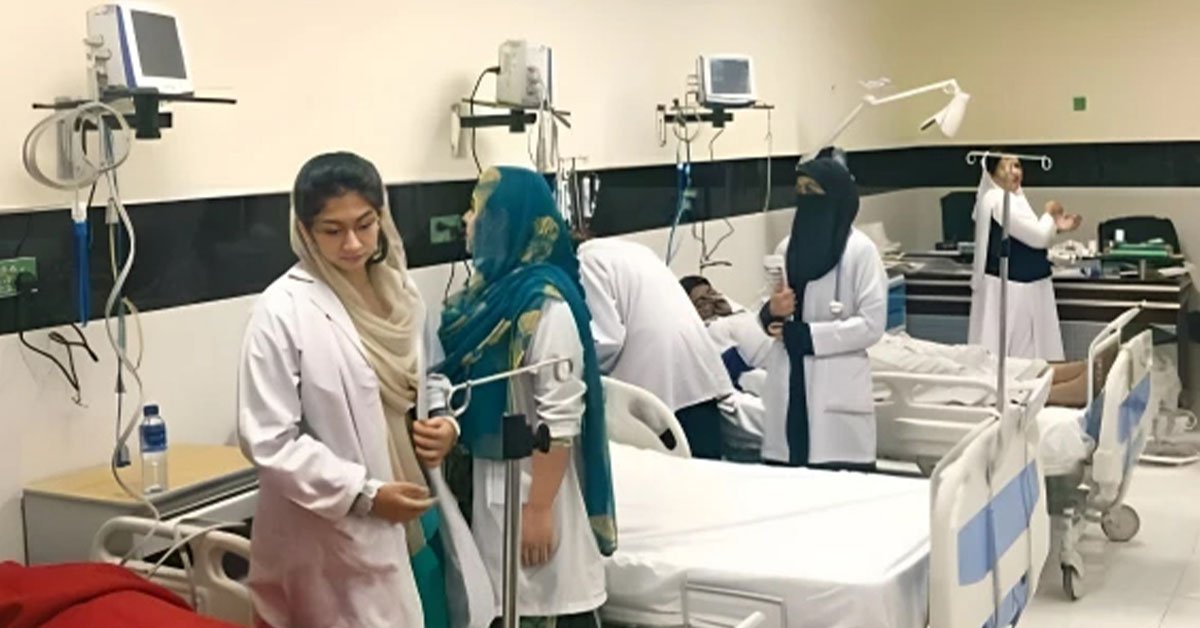
The Stroke Management Programme launched in public sector hospitals has emerged as a major relief for stroke patients, claims Punjab government.
It said the program launched under the vision of Punjab Chief Minister Maryam Nawaz Sharif. And it enabled hundreds to recover and avoid lifelong disability.
According to official data, more than 700 patients across Punjab have recovered after suffering stroke attacks during the past year. The programme ensures free provision of the life-saving TNK injection. The injection costs around Rs300,000 per dose.
A 70-year-old patient, Sharifa Bibi of Thokar Niaz Baig, was recently shifted to Services Hospital after suffering a severe stroke. The stroke left the right side of her body paralysed. And affected her speech and hand movement. Doctors provided her immediate treatement at the Chief Minister Stroke Management Centre established at the hospital.
Doctors administered the clot-busting TNK injection. Following which the patient regained speech within a few hours. And fully recovered the affected limbs. Expressing gratitude, Sharifa Bibi said the initiative had given her a new lease on life.
Her son said that had the injection not been administered in time, his mother would have faced permanent disability. He expressed deep appreciation for the initiative.
Free TNK Injection:
Punjab government is providing free TNK injections at 14 stroke management centres. The provincial government has established fully functional centres at Services Hospital. General Hospital and Mayo Hospital in Lahore. Nishtar Hospital Multan and Sheikh Zayed Hospital Rahim Yar Khan.
The government has also set up stroke management centres in Rawalpindi. In Sialkot, Gujranwala, Narowal, Dera Ghazi Khan and Layyah. While the CM has issued instruction to further expand the programme to other districts.
Maryam Nawaz Sharif termed the health of every citizen the government’s responsibility. She said providing free, quality medical care remained its firm commitment. Maryam added that if a stroke patient reached a relevant hospital within four hours, not only could a life be saved but permanent disability could also be prevented.

