


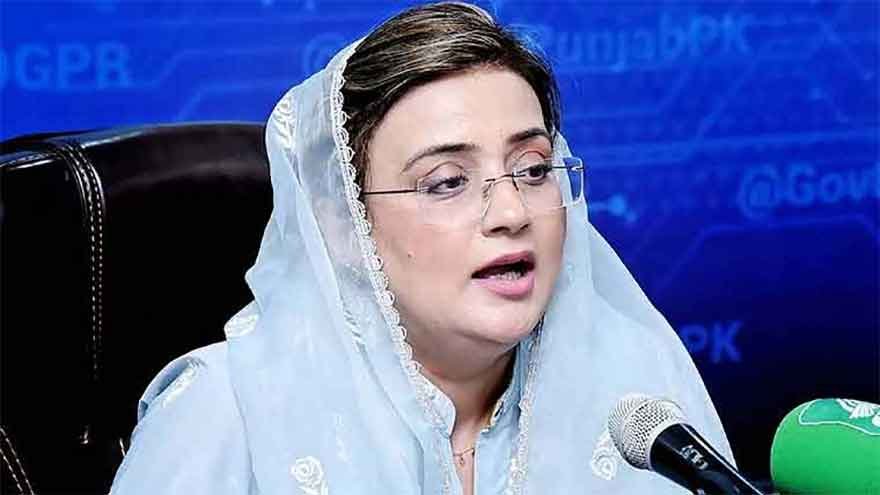
Punjab information minister Azma Bokhari has announced that the provincial government has formally launched the “Apna Khet Apna Rozgar.”
It is following the successful rollout of “Apni Chhat Apna Ghar” and the distribution of free plots to homeless citizens, she said.
Azma said the flagship initiative will not only create new employment opportunities. But, she added, it will also pave the way for a genuine agricultural revolution in the province.
Azma stated that the government will allocate land worth Rs160 billion to landless rural residents across Punjab. She clarified that the allotees will strictly use land for agricultural purposes to boost crop production. The Punjab government, she said, will provide financial grants ranging from Rs50,000 to Rs250,000 to farmers, enabling thousands to benefit directly.
Punjab Education Board Chairperson:
Meanwhile, the process for appointing new chairpersons to Punjab’s educational boards has entered its final phase.
The authorities conducted interviews of shortlisted candidates on Thursday. Education minister Rana Sikandar Hayat personally interviewed all candidates as part of the selection process.
Initially, as per statement, the authorities conducted interview of more than 250 candidates for the positions of board chairpersons. Out of which, they shortlisted 50 for the final stage. The minister individually assessed each candidate, evaluating their overall competence and suitability for the role.
During the interviews, he particular emphased on candidates’ professional capabilities, technological awareness, and alignment with modern educational requirements. He also examined their expertise in artificial intelligence (AI). Their understanding of board management, and command over the examination system.
Rana Sikandar Hayat further engaged candidates on their vision for introducing reforms as chairpersons, including potential AI-based initiatives to improve the functioning of educational boards.
Speaking on the occasion, the minister reiterated that he will uphold principle of “no slips, no recommendations, only merit” in the appointment process. He added that merit-based appointments would significantly enhance transparency and efficiency in the examination system.


