


Punjab has witnessed some of the worst tragedies for centuries, both before and after Partition. The romanticism surrounding its mustard fields, vibrant music, and agrarian life is largely a delusion, bearing little comparison to the hardships endured by its people.
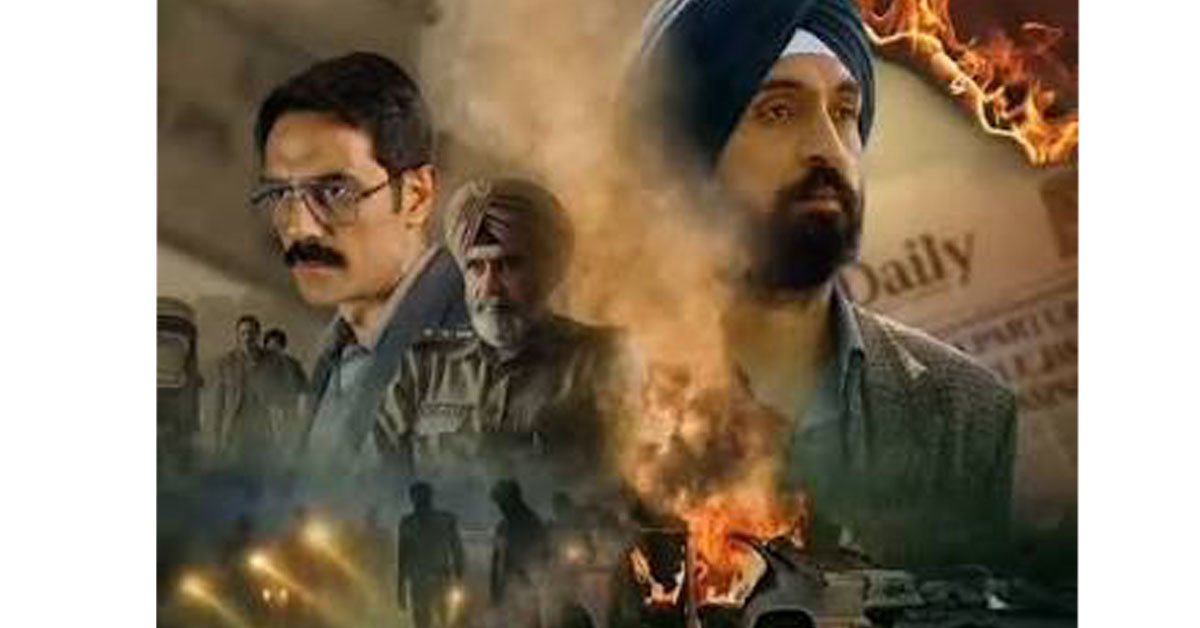
Honey Trehan’s hard-hitting biographical drama Satluj (titled Punjab ’95) has once again shattered the utopian fantasies about Punjab.
The film a portrayal of harrowing human tragedies and institutional violence against ordinary people through the tragic history of Punjab in the 1990s. While rooted in Indian Punjab, some of its themes resonate strikingly with the realities of Punjab, Pakistan.
While Satluj openly depicts the systemic extrajudicial killings carried out by the Indian state during the 1990s, the questions it raises are not confined to history. Instead, they also resonate across the border in Punjab, Pakistan, where allegations of encounter killings and state persecution continue to surface. Also, Punjab alone is not facing these issues, people in other parts of the country are also experiencing similar, and in some cases even more severe, forms of violence.
HRCP on CCD:
In Punjab, the newly formed Crime Control Department (CCD), established in 2025 under a provincial mandate to eliminate organized crime, has effectively mirrored the darkest elements of the police state depicted in Trehan’s film. Much like the state actors in Satluj who rationalized mass violence under the guise of maintaining order, the CCD, as per reports, has operated as a virtual parallel police force with alarming immunity.
According to Feb, 2026’s explosive reports by the Human Rights Commission of Pakistan (HRCP), the CCD was linked to over 900 suspect fatalities in a single eight-month span following its inception. The extreme casualty imbalance, hundreds of dead suspects versus virtually zero police casualties, points to an orchestrated system of extrajudicial execution rather than legitimate law enforcement.
Satluj marks a major shift in Diljit Dosanjh’s career. Best known for his charismatic and comic roles, the Punjabi star delivers one of the finest performances of his career as the late human rights activist Jaswant Singh Khalra, the film’s central character.
Jaswant Sing khalra:
Khalra documented thousands of illegal cremations and cases of enforced disappearances during insurgency Indian Punjab in the 1980s and 1990s. His investigations drew international attention to human rights abuses in the state. In September 1995, someone abducted him outside his home in Amritsar and later killed him, becoming one of the most prominent symbols of the struggle for justice and accountability in Punjab.
Arjun Rampal plays a CBI officer determined to bring those responsible to justice, while Suvinder Vicky delivers a powerful performance as the ruthless SSP Surjit Singh Sugga.
Honey Trepan directed the film and has co-written it with Niren Bhatt and Utsav Maitra serving. Cinematographer K.U. Mohanan effectively uses dark visuals and muted colours to immerse viewers in the grim reality of state violence. The film is now available on some online platforms after enduring a long and exhausting three-year battle with the Central Board of Film Certification (CBFC), which reportedly demanded more than 120 cuts.
Satluj is an emotionally powerful and deeply moving film that avoids sensationalism and easy answers. By portraying the life and sacrifice of Jaswant Singh Khalra, Trehan has created more than a historical drama that holds up a mirror to the entire subcontinent, prompting reflection on justice, accountability and human rights.


