


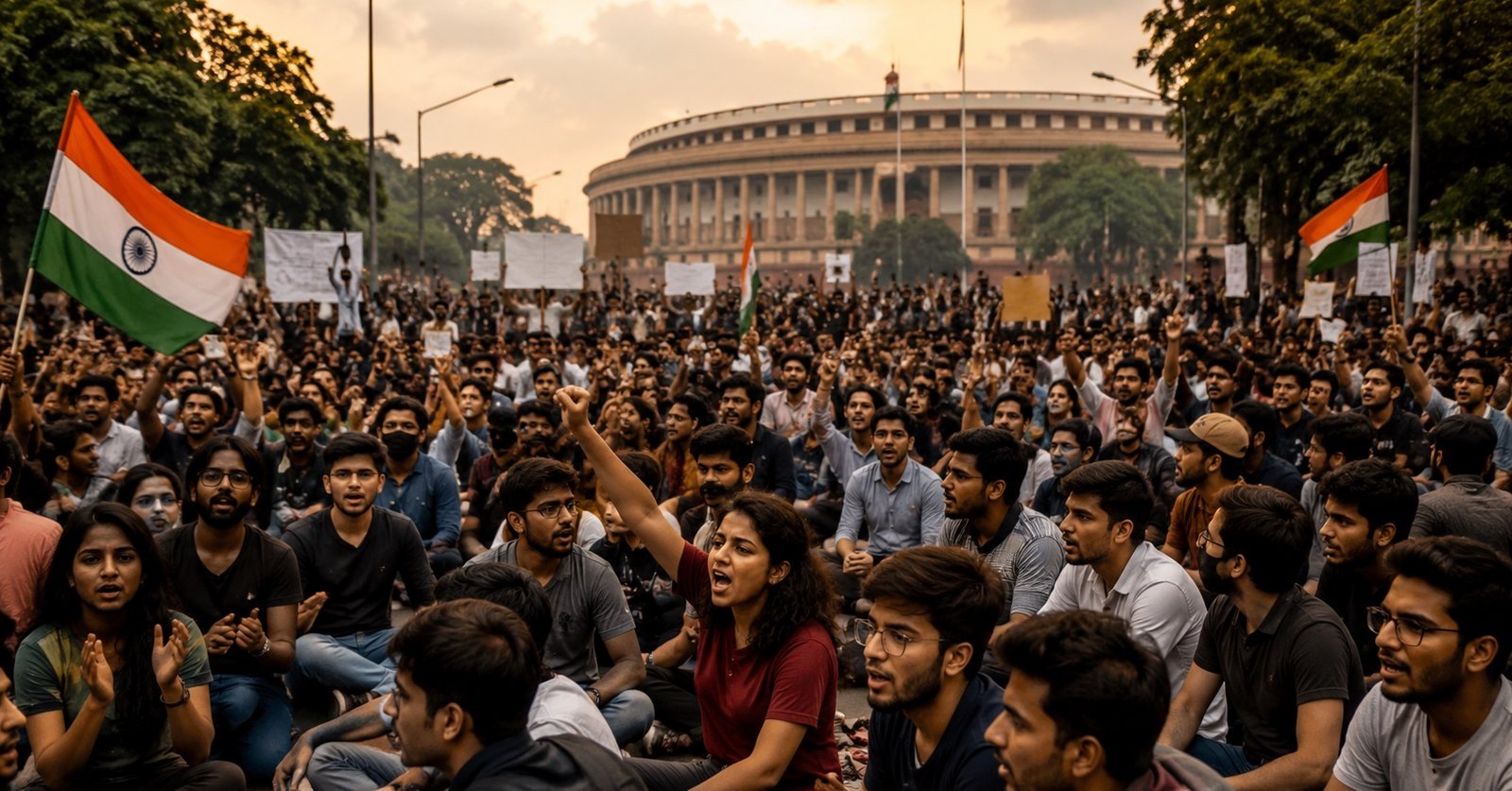
Led by India’s Gen-Z-driven satirical Cockroach Janta Party (CJP), roughly 100,000 young people are protesting at Jantar Mantar, Parliament Street, Connaught Place and adjacent areas in New Delhi.
They are demanding Education Minister Dharmendra Pradhan’s resignation, the unconditional release of Sonam Wangchuk and other youth activists, and compensation of one crore Indian rupees for the families of students who died by suicide following examination paper leaks. Hashtag MainBheCockroach went viral in all over India.
Many compare the youth uprising in India with Sri Lanka’s 2022 Aragalaya, Bangladesh’s 2024 Monsoon Revolution and Nepal’s 2025 Gen-Z uprising.
In many ways, the comparison is valid. Yet one should not expect the charged Indian youth to topple the government, nor have the protesters ever suggested such an objective.
Although many observers see the movement as a positive sign for the world’s largest democracy, India’s situation differs significantly from the three other South Asian nations that have witnessed major challenges to their political status quo since 2022.
Why India’s youth uprising resembles those in Sri Lanka, Bangladesh and Nepal and why it differs:
Sri Lanka’s Aragalaya began with young activists establishing the permanent protest camp known as GotaGoGama, which quickly attracted farmers, lawyers and other segments of society. The movement was driven by economic collapse, corruption, a foreign exchange crisis, hyperinflation, food and fuel shortages, and frustration with dynastic politics.
Nearly two years later, Bangladesh’s July Uprising, also known as the Monsoon Revolution, was overwhelmingly youth-led, initially protesting the quota system before expanding into a broader movement against Sheikh Hasina’s increasingly authoritarian rule.
Corruption, restrictions on social media and rising youth emigration also fuelled Nepal’s Gen-Z uprising in 2025. Now, more than a year later, students and young people are gathering in New Delhi.
Like the movements in the other three South Asian countries, Indian protesters are rallying against systemic failures.
Gen-Z Uprising in India:
However, India, despite criticism over democratic backsliding, Hindutva politics and concerns about secularism, still functions as a vibrant democracy. Its economy remains relatively strong, and its political system rests on well-established institutions and an active multi-party landscape.
India’s economic growth remains around seven percent, while inflation has eased compared with previous years and food supplies remain stable. However, rising fuel costs, trade-related pressures and persistent unemployment continue to weigh on the economy. Youth unemployment, which several independent studies estimate to be exceptionally high, has become the principal source of frustration driving the current protests. Opposition leaders, including Rahul Gandhi and members of the Aam Aadmi Party, have visited the demonstrators.
Many believe the BJP government will eventually seek a political solution to address their grievances. At the same time, the movement has given fresh hope to the opposition, which sees it as an opportunity to further erode the BJP’s support ahead of the next general election, still about three years away.


