


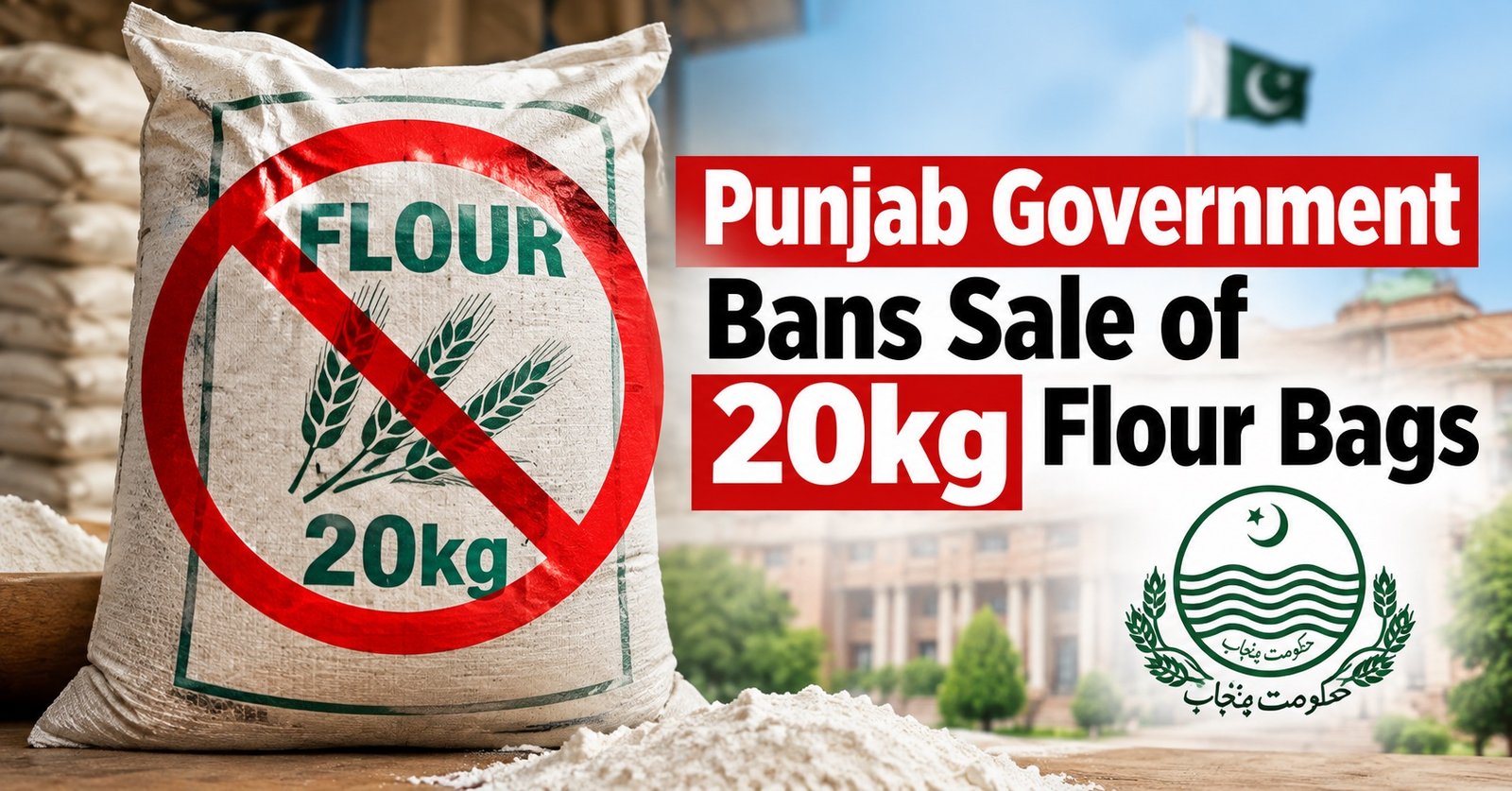
Punjab government has banned the sale of 20kg flour bags across the province.
Maryam Nawaz, Punjab chief minister, made the decision in a meeting on Saturday.
The provincial government will now only allow sale of 10kg bag in markets. The government, many believe, took the decision to avoid the shortages and price-hike of the flour.
Commissioners and deputy commissioners attended the meeting via video link. The meeting reviewed detailed reports on fluctuations in the prices of essential commodities.
Officials informed that prices of 10 commodities continued to show a downward trend.
The chief minister ordered strict monitoring of inter-provincial borders to prevent wheat and flour smuggling. She directed all deputy commissioners to achieve wheat cultivation targets in their respective districts. The government decided to cultivate wheat on all land covered under the Lambardars, Ghori Pal and Apna Khet, Apna Rozgar schemes. The chief minister ordered the cultivation of wheat on all government-owned land across the province.
Mandi Mart in Punjab:
The meeting also decided to introduce the “Transforming Market Waste into Wealth” initiative for the first time in Punjab. The chief minister approved a dehydration project under Punjab Agricultural Marketing Regulatory Authority (PAMRA) to ensure the availability of off-season fruits and vegetables.
It was informed that Punjab’s first Mandi Mart project for fruits and vegetables had been launched in Kahna. The chief minister set a target for its early completion. She directed the authorities to take steps to establish Mandi Marts across the province.
Maryam Nawaz ordered measures to ensure the availability of bananas, apples and dates at controlled prices. She directed every deputy commissioner to ensure adequate stocks of these commodities in cold storage facilities in their respective areas to meet demand during the holy month.
Sale of Loose Milk:
The chief minister also directed the authorities to take effective measures to regulate the sale of loose milk in accordance with hygiene and food safety standards.
The officials presented comparative review of the prices of 15 essential commodities. They include vegetables, pulses and other food items. The briefing stated that prices of 10 commodities had recorded a downward trend, with reductions reported at up to 252 per cent. Prices of most food items remained stable, while pulse prices also remained unchanged.
The meeting was further informed that the Price App would be upgraded. the government will upgrade it to improve price monitoring and ensure stability in the market.


